
Planning a heat treatment for large industrial equipment is one of the most important steps in any metallurgical, offshore, or energy project.
Far from being an improvised process, it requires thermal analysis, load forecasting, selection of specific equipment, and a strategy adapted to each geometry, thickness, and working environment.
Why is planning critical in heat treatment?
Poorly planned heat treatment can lead to internal stresses, deformation, or structural failures, especially in components subjected to pressure or demanding environmental conditions. For this reason, sectors such as offshore, nuclear industry, and the manufacture of large pressure vessels rely on highly controlled thermal procedures.
Main stages in heat treatment planning
1. Component analysis and technical requirements
Before applying heat, the component must be carefully analyzed: thickness, material, critical joints, and applicable standards. This is particularly important in:
- Heat treatment of pressure vessels
- Pre-heating of welding in large joints
- Preheating of shell sections in furnaces
- Offshore wind jacket projects
In these structures, thermal stability is a key factor in ensuring resistance to mechanical and environmental loads.
2. Selection of the appropriate heat treatment technology
Each process requires a specific approach. The most commonly used technologies include:
- Induction heating for fast and localized heating
- Ceramic resistance heaters for longitudinal and circumferential weld seams
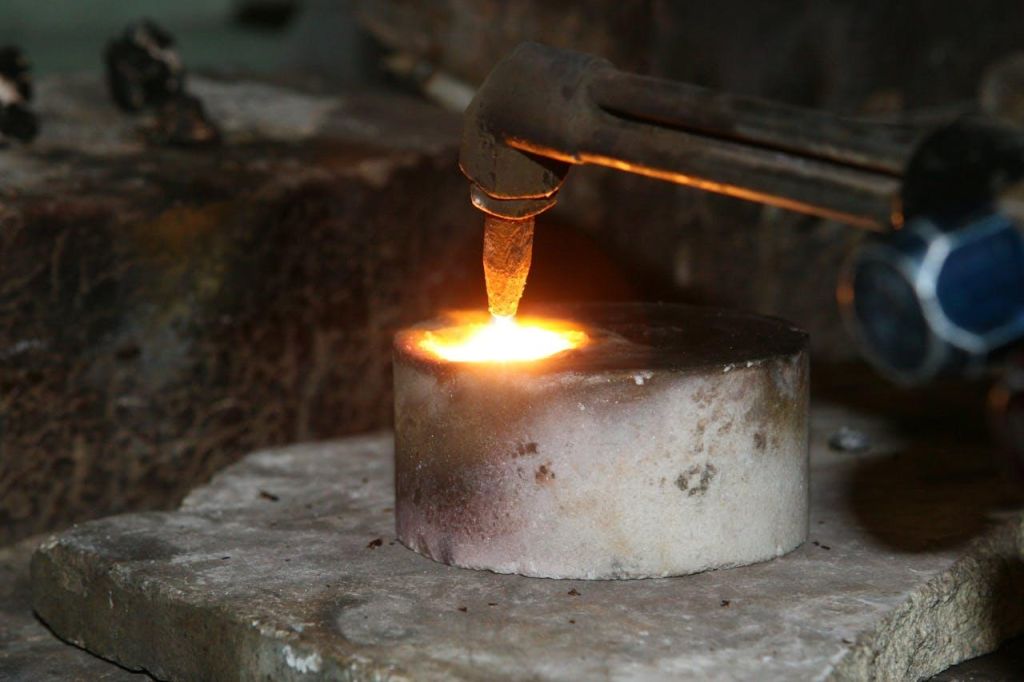
- Burners for refractory drying in furnaces and reactors
- Electrical methods for high-precision post-weld heat treatment (PWHT)
The high-temperature solutions available today allow adaptation to extreme conditions without compromising safety.
3. Thermal strategy design
This stage includes defining:
- Heating and cooling curves
- Thermocouple locations
- Required power per zone
- Heat application sequence
In projects such as preheating on oil platforms or offshore jackets, this phase is essential to compensate for the effects of wind, humidity, or salinity.
4. Control and monitoring during the process
Industrial heat treatment requires real-time temperature measurement and recording. For this purpose, the following are used:
- Type K thermocouples
- Multichannel data loggers
- Automatic thermal control systems
This ensures continuous monitoring in both nuclear preheating and nuclear heat treatment processes, where there is no margin for deviation.
![Heat application for preheating a metal component in an industrial heat treatment process]()
The importance of refractories in thermal planning
Refractories, which are essential in furnaces and thermal chambers, also require careful planning. Drying and curing must follow specific curves to prevent cracking. Proper equipment selection and heating time definition ensure that the installation achieves maximum thermal performance.
Planning an industrial heat treatment is a technical process that determines the final quality of any large-scale equipment or structure. From pressure vessels to offshore structures or nuclear projects, success depends on combining expertise, technology, and controlled execution at every stage of the work.